
· By Faan Perfumes
FAAN Amjad Mystery vs FAAN Amjad Coral: which FAAN perfume should you buy?
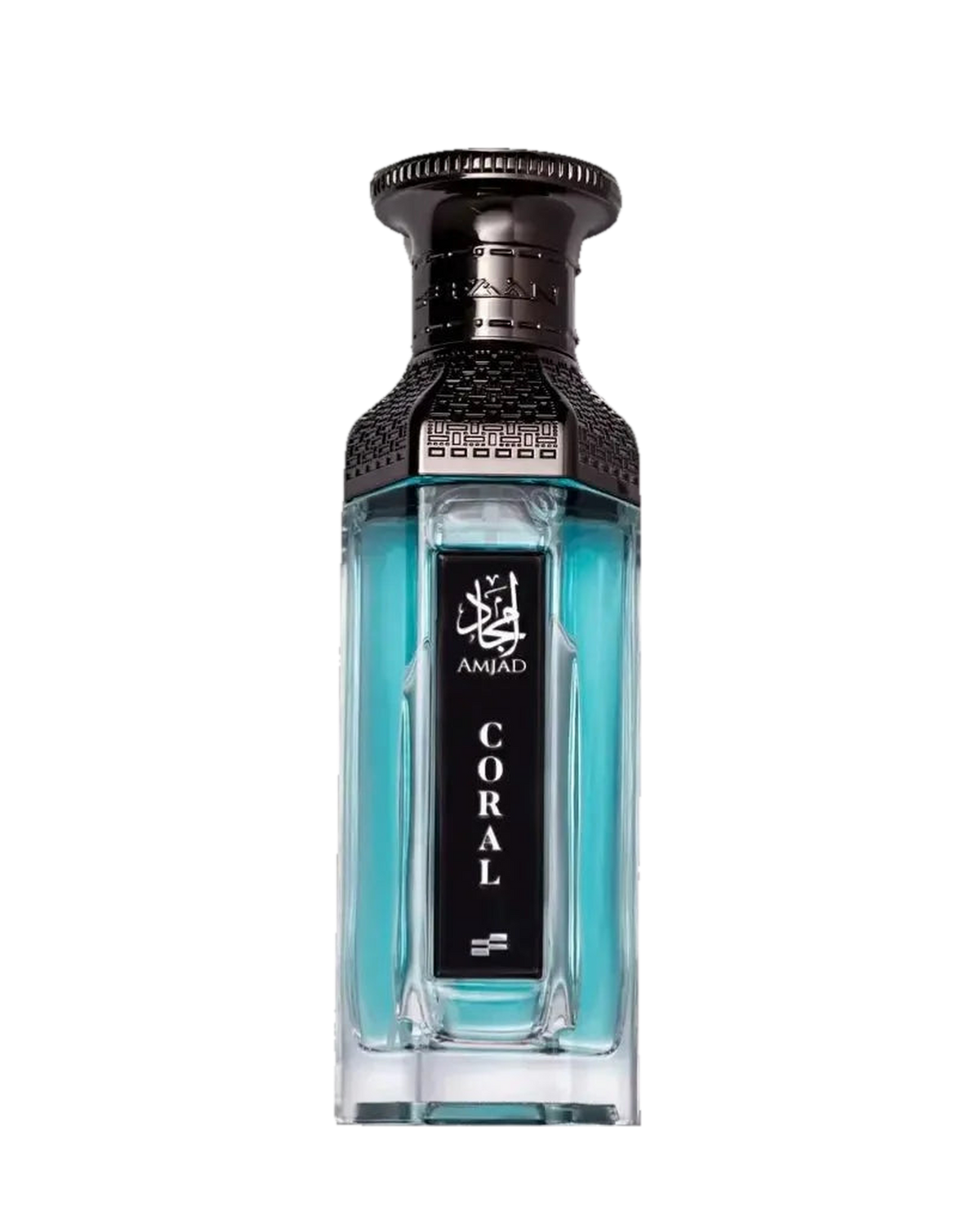
Quick answer: Amjad Mystery vs Amjad Coral: both open with pear, both end on Akigalawood, and after that they split. Mystery is warm and nutty with saffron, rose and vanilla, rated 3 for projection and 4 for longevity, for autumn and winter. Coral is fresh and woody, rated 3 and 3, for spring and summer. Mystery costs €54.99, Coral €44.99.
Both come from the Amjad line and both are 200 ml Extraits. Neither lists oud, which makes this one of the gentlest pairings in the line: if oud puts you off, you are safe with either. Everything below comes from the product pages, and a shared note on two lists says little about how a scent will feel on your own skin.
Amjad Mystery vs Amjad Coral: the verdict in three lines
- Amjad Mystery for cold weather, evenings and anyone who likes sweet and nutty.
- Amjad Coral for warm weather, the office and anyone who likes clean.
- If you wear perfume all year, these two cover both halves of it, for €99.98 together.
Notes side by side
| Mystery | Coral | |
|---|---|---|
| Top | Pear, hazelnut, frankincense | Pear, bergamot, mandarin, ginger |
| Heart | Rose, saffron, sambac jasmine, osmanthus | Orange blossom, Georgywood |
| Base | Sandalwood, vanilla, ambergris, Akigalawood | Ambrofix, musk, Akigalawood, cedar |
| Accords | Amber, floral, woody, resinous | Fresh, citrus, woody, musky |
Shared: pear in the top and Akigalawood in the base. Only Mystery: ambergris, frankincense, hazelnut, jasmine, osmanthus, rose, saffron, sandalwood and vanilla. Only Coral: Ambrofix, bergamot, cedar, Georgywood, ginger, mandarin, musk and orange blossom.
The pear is the interesting overlap. In Coral it sits beside citrus and ginger and smells crisp. In Mystery it sits beside hazelnut and frankincense and smells soft and ripe. Same fruit, two moods.
First hour and dry-down
Mystery opens with ripe pear and hazelnut over a thin trail of frankincense. The heart brings rose and saffron, with sambac jasmine and osmanthus, a creamy, apricot-like flower. The base is sandalwood, vanilla and ambergris, warm and smooth, with the Akigalawood giving it a dry woody edge.
Coral opens crisper. Pear and mandarin lead, bergamot adds a bitter edge, ginger gives a spark. Orange blossom and Georgywood take over, and the base is dry wood, cedar and musk. The Akigalawood shows here as a clean, slightly peppery wood.
Strength and staying power
Mystery: 3/5 projection and 4/5 longevity. Coral: 3/5 and 3/5. They sit at the same distance from your skin. The difference is time: Mystery has an extra hour or two in the tail. Both want two or three sprays.
Season, occasion, audience and price
Mystery: autumn and winter, date nights and special occasions. Coral: spring and summer, daily wear and the office. Both are unisex Extraits in 200 ml. Mystery costs €54.99, about 27.5 cents per ml, and Coral costs €44.99, about 22.5 cents per ml, ten euros less. With size, concentration and projection equal, the choice is one of weather and sweetness.
Five situations, one pick each
| Situation | Better pick |
|---|---|
| Dinner on a cold night | Mystery. |
| Open-plan office in June | Coral. |
| A wedding in the autumn | Mystery, or see the wedding guest picks. |
| A spring wedding | Coral. |
| A gift for someone who likes sweet scents | Mystery. |
Who should pick which
Choose Mystery if you like warm sweetness, nuts and flowers with a little smoke, and you want a scent that feels close and romantic.
Choose Coral if you want clean, light and bright, and you do not want your scent to carry across a room.
Either way you are in the Amjad line. The Amjad collection guide explains the five Extraits, and all FAAN perfumes shows the full range.
FAQ
Do Amjad Mystery and Amjad Coral smell alike?
No. They share pear and Akigalawood, but one is warm, nutty and floral and the other fresh and woody.
Which lasts longer?
Mystery, with 4/5 for longevity against 3/5. Their projection is the same.
What if one is sold out?
Ask to be notified on the product page. Delivery takes 3 to 6 working days in the Netherlands and 5 to 8 working days in the rest of the EU.
Related reading
Journal
From the journal

Pear in perfume: what it smells like and which FAAN bottles use it
Pear is a juicy, crisp top note. Four FAAN bottles use it, each with a different partner, and Amjad Coral is the one to start with.
Read article →
FAAN Amjad Coral vs FAAN Qasida Signature: which FAAN perfume should you buy?
Amjad Coral is bright and clean, Qasida Signature is warm and sweet. This comparison shows the notes, strength, season and price side by side.
Read article →
FAAN Qasida Al-Badr, inspired by Armani Code Absolu: what it is on its own
Qasida Al-Badr is inspired by Armani Code Absolu. This page describes the FAAN bottle on its own terms and makes no claim that the two smell alike.
Read article →