
· By Faan Perfumes
FAAN Qasida Al-Badr vs FAAN Qasida Bidaya: which one should you buy?
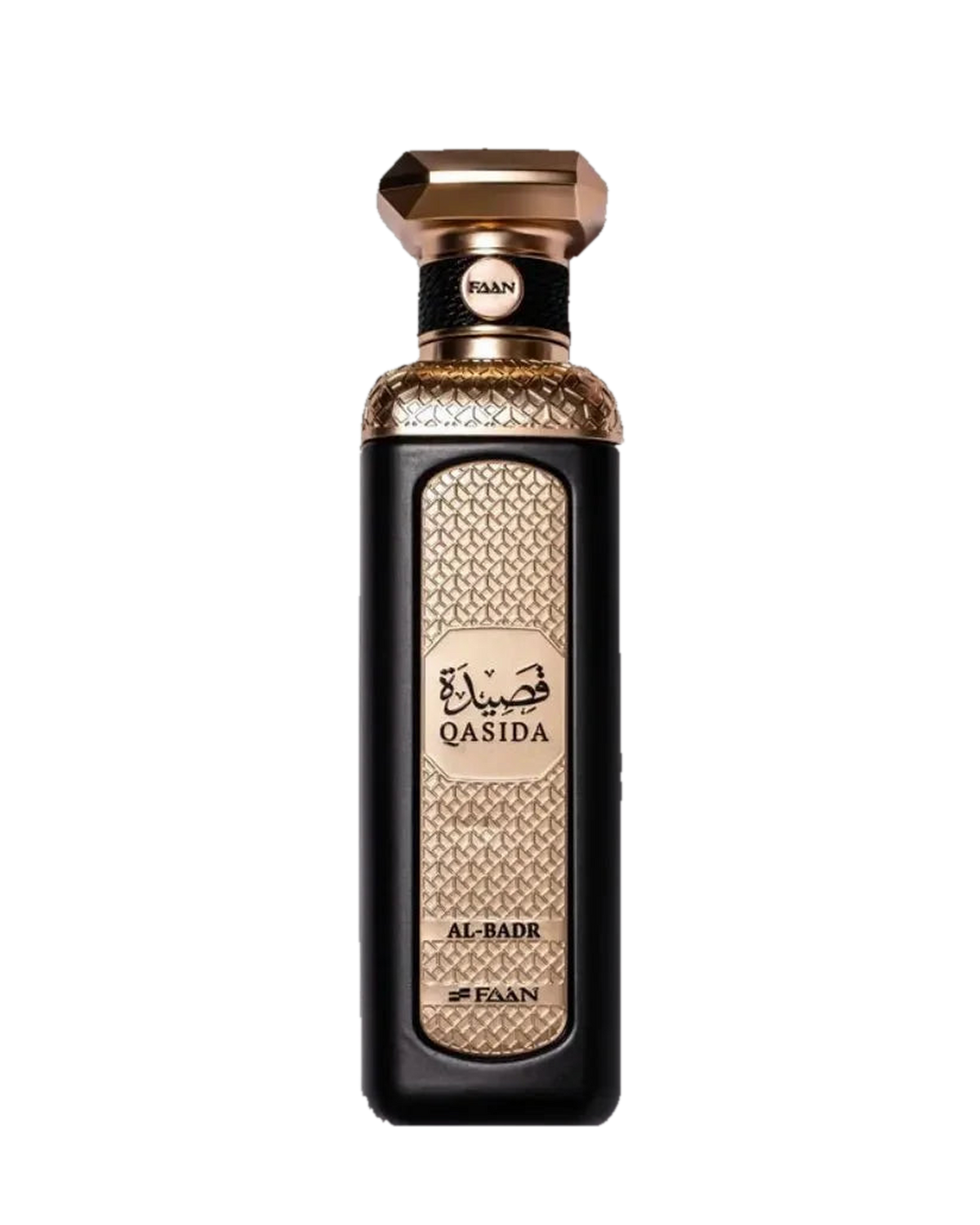
Quick answer: Qasida Al-Badr vs Qasida Bidaya is a choice between day and evening. Al-Badr is dry, powdery spice with iris, sage and vetiver, rated 3 out of 5 for both projection and longevity, and listed for office and daily wear. Bidaya is saffron, resin, leather and vanilla, rated 3 and 4, and listed for evenings. Bidaya is an Extrait at 44.99 euros, seven euros below Al-Badr.
FAAN Qasida Al-Badr and FAAN Qasida Bidaya are both unisex and neither is loud. The price is the surprise: the Extrait is the cheaper bottle.
Quick verdict in three lines
- Al-Badr for work and daytime: dry, powdery, three seasons.
- Bidaya for evenings: saffron, resin, vanilla, and a longer finish.
- If money matters, Bidaya wins on paper. If you need an office scent, Al-Badr wins on purpose.
Notes side by side
| Qasida Al-Badr | Qasida Bidaya | |
|---|---|---|
| Top | bergamot, nutmeg, cardamom | saffron, bergamot, cardamom |
| Heart | iris, sage, cedarwood | opoponax, cedarwood |
| Base | vetiver, tonka, vanilla, patchouli | vanilla bean, benzoin, leather, white musk |
| Accords | aromatic, spicy, woody | spicy, amber, resinous, vanilla |
They share bergamot, cardamom, cedarwood and vanilla. Only Al-Badr has nutmeg, iris, sage, vetiver, tonka and patchouli. Only Bidaya has saffron, opoponax, benzoin, leather and white musk. So both open on a bright citrus-and-cardamom note, then go in different directions: Al-Badr toward herbs and powder, Bidaya toward resin and warmth.
First hour and dry-down
Al-Badr starts cool and tidy, with bergamot, nutmeg and cardamom. After a while iris brings a face-powder softness and sage adds a herbal edge, with cedarwood keeping everything dry. The base is vetiver with tonka and vanilla, a gentle biscuit sweetness, and patchouli kept low. Nothing sticks out, and that is the point.
Bidaya opens with saffron, which adds a golden, faintly metallic spice, over bergamot and cardamom. Opoponax, a sweet resin, and cedarwood form a short heart. The base is where it settles: vanilla bean, benzoin and white musk, with a touch of leather. It ends in a soft, warm resin that feels closer to a blanket than to a spice rack.
Strength and staying power
Al-Badr is rated 3 out of 5 for projection and 3 for longevity, so expect a few hours of clear scent and a faint trace after. Bidaya is rated 3 for projection and 4 for longevity, so it stays about as quiet but lasts longer. Neither will fill a room. Both are 200 ml. Al-Badr is an Eau de Parfum, Bidaya an Extrait, which is why Bidaya holds on longer even with the same reach.
Season, occasion, audience and price
Al-Badr is listed for autumn, winter and spring, daily wear and the office, unisex. Bidaya is listed for autumn and winter, evenings and special occasions, unisex. Al-Badr costs 51.99 euros, which is 26.0 cents per ml. Bidaya costs 44.99, which is 22.5 cents per ml. You pay less for the longer-lasting one, and the difference is seven euros.
Who should pick which
Pick Al-Badr if you want a perfume that can sit beside a keyboard, or if you do not like sweet scents. Pick Bidaya if you want something to wear to dinner, you like saffron and resin, and you do not need it to work in an office. Own both? Use Al-Badr by day and Bidaya at night. More on cardamom, which the two share, is in our cardamom guide. To place both among the other bottles, use the guide to choosing a FAAN perfume or browse the full range. For a stronger evening resin at the same 44.99 euros, there is also Amjad Honour.
FAQ
Is Qasida Bidaya stronger than Qasida Al-Badr?
Its projection is the same, 3 out of 5. Its longevity is higher, 4 against 3.
Which is better for the office?
Al-Badr. It is listed for daily wear and the office.
Why is the Extrait cheaper?
The price is set per bottle, and Bidaya is listed at 44.99 euros against 51.99 for Al-Badr. Both are 200 ml.
Related reading
Journal
From the journal
FAAN Qasida Al-Badr vs FAAN Qasida Bidaya: which one should you buy?
Al-Badr is a calm, dry daytime Eau de Parfum. Bidaya is a warmer, resinous Extrait for evenings, and it costs seven euros less.
Read article →
FAAN Qasida Queen vs FAAN Qasida Bakhour: which one should you buy?
Two loud autumn and winter bottles with the same 4 out of 5 ratings. Queen is sweet and gourmand for her, Bakhour is smoky and leathery and unisex.
Read article →
FAAN Qasida Senses vs FAAN Qasida Queen: which one should you buy?
Two FAAN perfumes written for her, priced one euro apart. Senses is bright and fruity for spring and summer, Queen is dark and sweet for autumn and...
Read article →