
· By Faan Perfumes
FAAN Amjad Coral vs FAAN Qasida Al-Badr: which FAAN perfume should you buy?
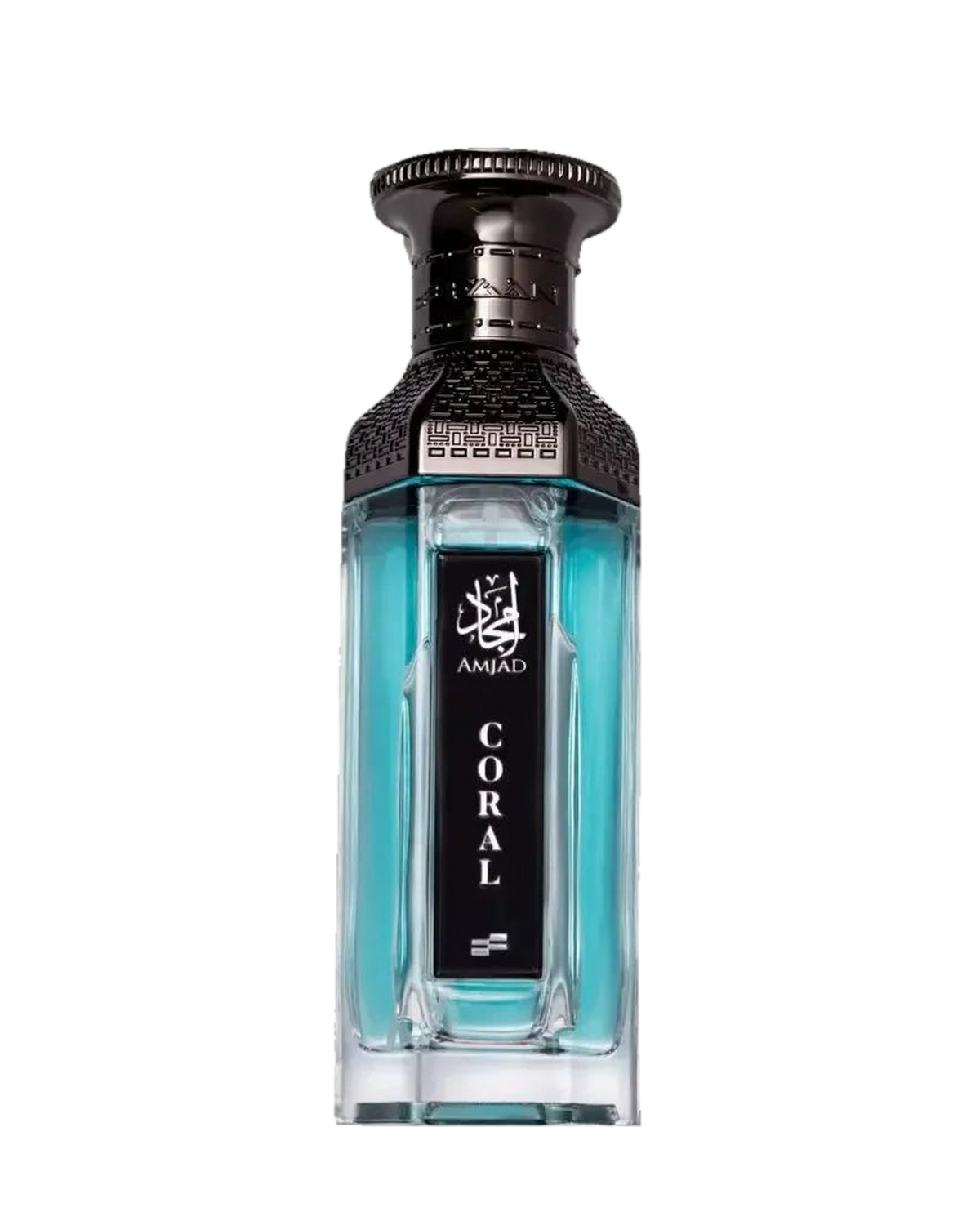
Quick answer: Amjad Coral vs Qasida Al-Badr is mostly a question of weather. Both are listed unisex, both are rated 3 out of 5 for projection and longevity, and both are made for daily wear and the office. Coral is fresh, with pear, citrus and cedar, and is listed for spring and summer. Al-Badr is calm and powdery, with iris, nutmeg and vetiver, and is listed for autumn, winter and spring. If you have to pick one for the whole year, Al-Badr covers more months.
FAAN Amjad Coral is one of our best sellers and the fresh bottle of the Amjad line. FAAN Qasida Al-Badr is the quiet, dry one of the Qasida line.
Three-line verdict
- Coral: bright, citrus and woods, for warm days. 44.99 euros, Extrait de Parfum.
- Al-Badr: calm, spicy and powdery, for cool days. 51.99 euros, Eau de Parfum.
- Both: safe at work, easy for anyone, polite at arm's length.
Amjad Coral vs Qasida Al-Badr: notes they share and notes they do not
| Amjad Coral | Qasida Al-Badr | |
|---|---|---|
| Only in this bottle | Pear, mandarin, ginger, orange blossom, Georgywood, Ambrofix, Akigalawood, musk | Nutmeg, cardamom, iris, sage, vetiver, tonka, vanilla, patchouli |
| Projection | 3/5 | 3/5 |
| Longevity | 3/5 | 3/5 |
| Concentration | Extrait de Parfum | Eau de Parfum |
| Price, 200 ml | 44.99 euros | 51.99 euros |
Bergamot is the one note both list by name. Cedar is another bridge: Coral has cedar in the base and Al-Badr has cedarwood in the heart, so both have the same dry, pencil-shaving wood. The rest is different. Coral is built on fruit and light woods. Al-Badr is built on spice, iris and a base of vetiver, tonka and vanilla.
The first hour: how each one begins
Coral starts with pear, mandarin and bergamot, and ginger gives it bite. It feels like an open window. Orange blossom and Georgywood take over within the hour, and the dry-down is cedar and musk.
Al-Badr starts with bergamot, nutmeg and cardamom, which is warmer and drier than Coral's citrus. In the heart iris brings a powdery softness, with sage and cedarwood keeping it green and dry. The base is vetiver, tonka, vanilla and patchouli. Its tagline sums it up: calm spice, powdery and dry. It is more of a cardigan than an open window.
Strength and staying power
Both are rated 3 out of 5 for projection and 3 out of 5 for longevity. Our ratings, not lab numbers. Expect a clear scent for a good part of the day and a quiet trace later. Coral is an Extrait and Al-Badr an Eau de Parfum, but the ratings are the same, so do not pay extra for a concentration you cannot smell. Three to four sprays suit either.
Season, moment, audience and price
- Season: Coral, spring and summer. Al-Badr, autumn, winter and spring.
- Moments: both daily wear and office.
- Audience: both unisex.
- Price: Coral is 44.99 euros (about 0.22 euro per ml). Al-Badr is 51.99 euros (about 0.26 euro per ml). Both are 200 ml.
Spring is the only season both cover. That overlap is why they get compared, and also why they work well as a pair.
Choose Coral if, choose Al-Badr if
Choose Coral if you want something that feels clean and fresh in warm weather, or if the price matters. Choose Al-Badr if you want a scent you can wear in three seasons, if you like powdery notes such as iris, or if you prefer spice to citrus.
If you work in an office all year, owning both is a reasonable plan: Coral from April to September, Al-Badr from October to March. Together they cost 96.98 euros, and shipping in the Netherlands is free from 75 euros. Read the Qasida Al-Badr review for the details of its notes and the Amjad Coral review for Coral's. To keep browsing, try which FAAN perfume to choose or see all FAAN perfumes.
FAQ
Is Al-Badr stronger than Coral?
No. Both are rated 3 out of 5 for projection and 3 out of 5 for longevity.
Which is better for the office?
Both list the office. Coral is lighter and brighter, Al-Badr calmer and spicier.
What if one of them is sold out?
Ask to be notified on the product page. Orders take 3 to 6 working days in the Netherlands and 5 to 8 working days in the rest of the EU.
Related reading
Journal
From the journal

Layering FAAN Amjad Kingdom with FAAN Amjad Mystery: powder and nut over amber
How to layer FAAN Amjad Kingdom and FAAN Amjad Mystery: what each brings, the order and number of sprays, what you smell at one hour and at six, an...
Read article →
Returns and refunds for perfume orders: what to know before you buy
How returns and refunds work for FAAN perfume orders at Faan Perfumes: the 14-day right to withdraw, why the seal matters, how to start a return, w...
Read article →
Perfume delivery to France: Mondial Relay, GLS and DHL options
How to get FAAN perfume delivered in France: three shipping options (Mondial Relay pickup at 8.40, GLS or FedEx home delivery at 9.99, DHL France a...
Read article →