
· By Faan Perfumes
Arabic-style vs European-style perfume: what actually differs
Quick answer: Arabic vs European perfume is a difference of style, not of map. Arabic-style scents tend to be built on oud, amber, rose, saffron, incense and musk, in denser, longer-lasting blends. European-style scents tend to lean on citrus, aromatic herbs, light florals and lighter woods, and to sit closer and fresher. Both sides blur all the time. This guide explains the tendencies and shows how they appear in the FAAN range.
These are generalisations, and every one has exceptions. There are fresh perfumes from the Middle East and rich amber scents from Europe. Think of the two as habits, not borders.
Note palette differences
Arabic style usually starts from materials that have long been part of scent culture there: oud (agarwood), frankincense and other resins, amber, rose, saffron, sandalwood and musk. Many of them come from burned incense and oil traditions. The result is warm, deep and often sweet or smoky.
European style has traditionally leaned on citrus, lavender and herbs, light flowers such as lily of the valley, jasmine and iris, green notes and clean woods. It tends towards fresh, airy and tidy.
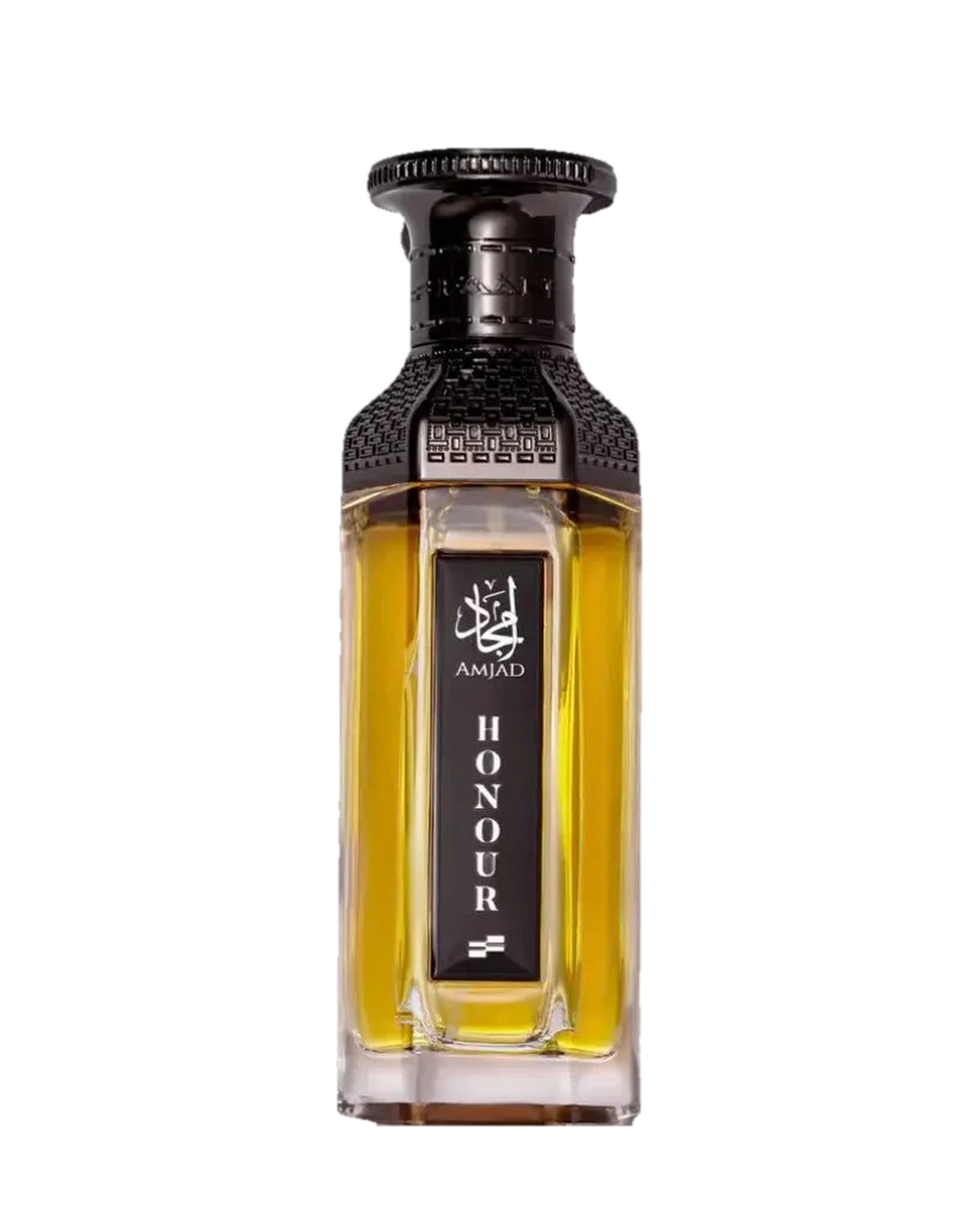
In the FAAN range you can see both. Amjad Honour has frankincense, saffron, rose, oud and ambergris. Amjad Coral has pear, bergamot, ginger and cedar.
Dose and density
Arabic-style perfumes often use more perfume oil and thicker bases, so a few sprays on clothes carry a long way. That fits the habit of wearing a rich scent for an evening that lasts. European-style perfumes more often sit in lighter concentrations, made to be reapplied, though many modern ones are dense too.
Concentration is a separate matter from style. Our range proves it: Qasida Al-Badr is an Eau de Parfum and calm, while Honour is an Extrait and bold. For the details of concentrations, read attar vs Eau de Parfum vs Extrait.
Sillage and longevity habits
Sillage is the trail a scent leaves. In the Arabic-style habit a noticeable trail is often part of the pleasure, and it is common to scent clothes, scarves and hair, not just skin, and to layer. European-style custom tends to favour a closer, more private scent, applied to the skin.
Neither is better. The habits also change with climate, room and occasion. Fabric holds scent for days, so a scarf treated the Arabic way works for any style.
Where the styles meet
Modern perfumery is a mix. Oud is now common in European-made scents, and fresh citrus openings are common in Middle Eastern ones. A bottle can open fresh and finish rich. Qasida Sahm does exactly that: mango, lemon and ginger first, oud and leather last.
A simple test at home: spray a fresh bottle and a resinous one on separate paper strips. Smell both after ten minutes, after an hour and after four. The fresh one will change least, and the resinous one will keep unfolding. That small experiment teaches more than any label.
What this means when you buy FAAN
FAAN uses the Arabic vocabulary in its range. The names Qasida and Amjad are Arabic words (see what Qasida and Amjad mean), and several bottles carry oud, incense, saffron and amber. We are an independent retailer and cannot speak for how any bottle is made. What we can do is tell you what the notes say.
- If you want a rich, resinous scent: Honour or Qasida Signature.
- If you want something fresher: Coral.
- If you want a bridge: Sahm, or Al-Badr.
New to the style? Read FAAN perfumes for beginners to Arabic-style perfume. See all FAAN perfumes.
FAQ
Do Arabic perfumes always smell like oud?
No. Oud is one note among many. Plenty of Arabic-style scents are floral, fruity or gourmand.
Do Arabic perfumes last longer?
Often they are built to, with dense bases, but it depends on the bottle. Check the longevity rating, not the label.
What if a bottle is sold out?
Ask to be notified on the product page. Orders take 3 to 6 working days in the Netherlands and 5 to 8 working days in the rest of the EU.
Related reading
Journal
From the journal

Layering FAAN Amjad Kingdom with FAAN Amjad Mystery: powder and nut over amber
How to layer FAAN Amjad Kingdom and FAAN Amjad Mystery: what each brings, the order and number of sprays, what you smell at one hour and at six, an...
Read article →
Returns and refunds for perfume orders: what to know before you buy
How returns and refunds work for FAAN perfume orders at Faan Perfumes: the 14-day right to withdraw, why the seal matters, how to start a return, w...
Read article →
Perfume delivery to France: Mondial Relay, GLS and DHL options
How to get FAAN perfume delivered in France: three shipping options (Mondial Relay pickup at 8.40, GLS or FedEx home delivery at 9.99, DHL France a...
Read article →